Research OS for K-12
Where students of all levels access, become aware of, understand, internalize, and produce knowledge.
Your first task
One concept, four steps. Research OS is in private testing.
- Pick one concept, for example ATP synthase.
- Ask the AI for sources. It returns quotes with the page they came from.
- Write one sentence of your own about the concept.
- Run the check. It compares your sentence with the quotes and shows which claims a quote supports.
Five States
The same concept at five depths, from being allowed to open it to adding a new node beside it. Each depth holds the ones before it.
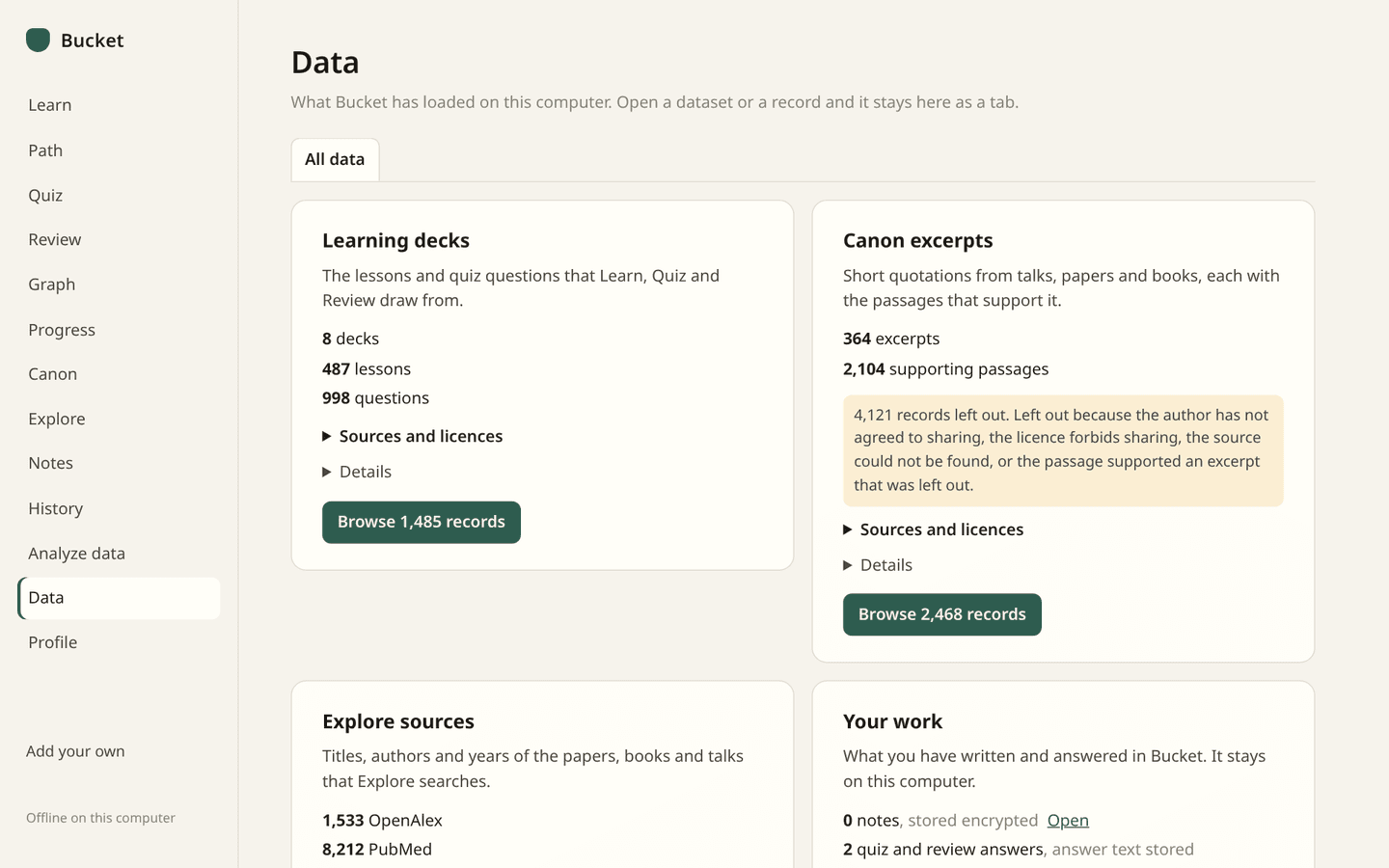
Access
Who can see and use a piece of knowledge. Public, private, or shared with named people, the way a repository or a drive works.
view Data in the app →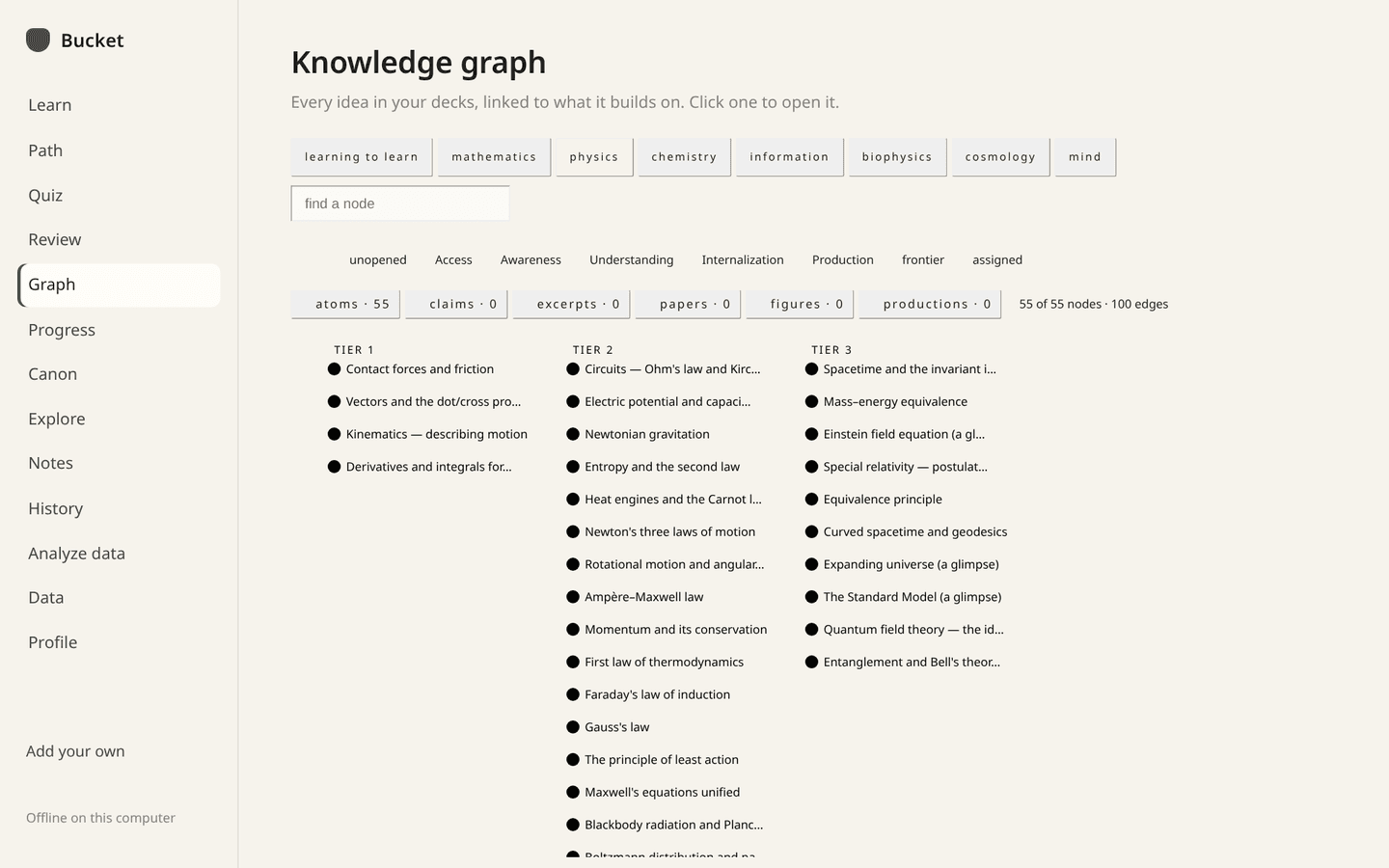
Awareness
Knowing where knowledge can go. From any node, the directions beyond it and the frontier around it.
view the Graph in the app →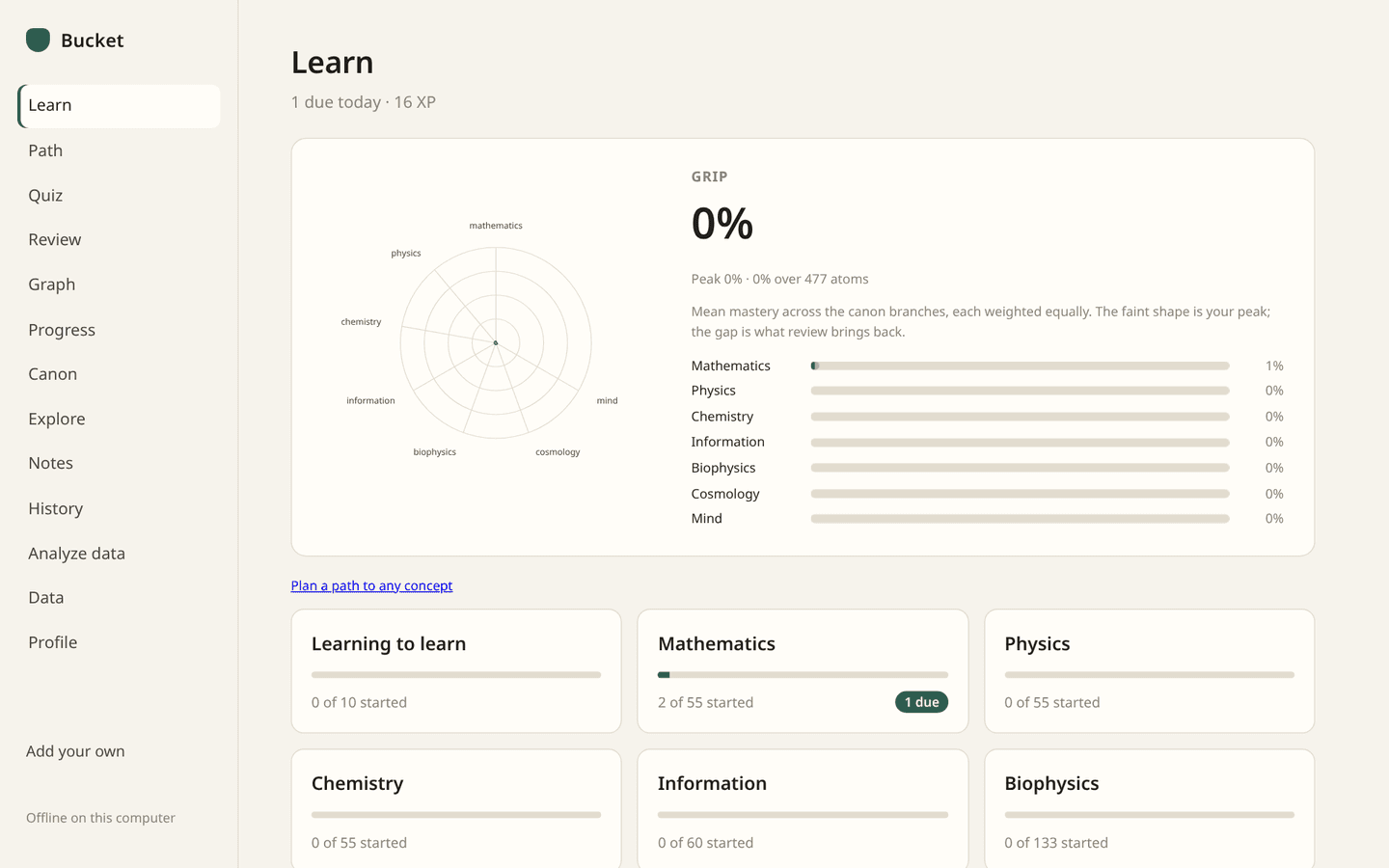
Understanding
Learning the thing itself. Lessons, recall, and checks until the concept holds.
view Learn in the app →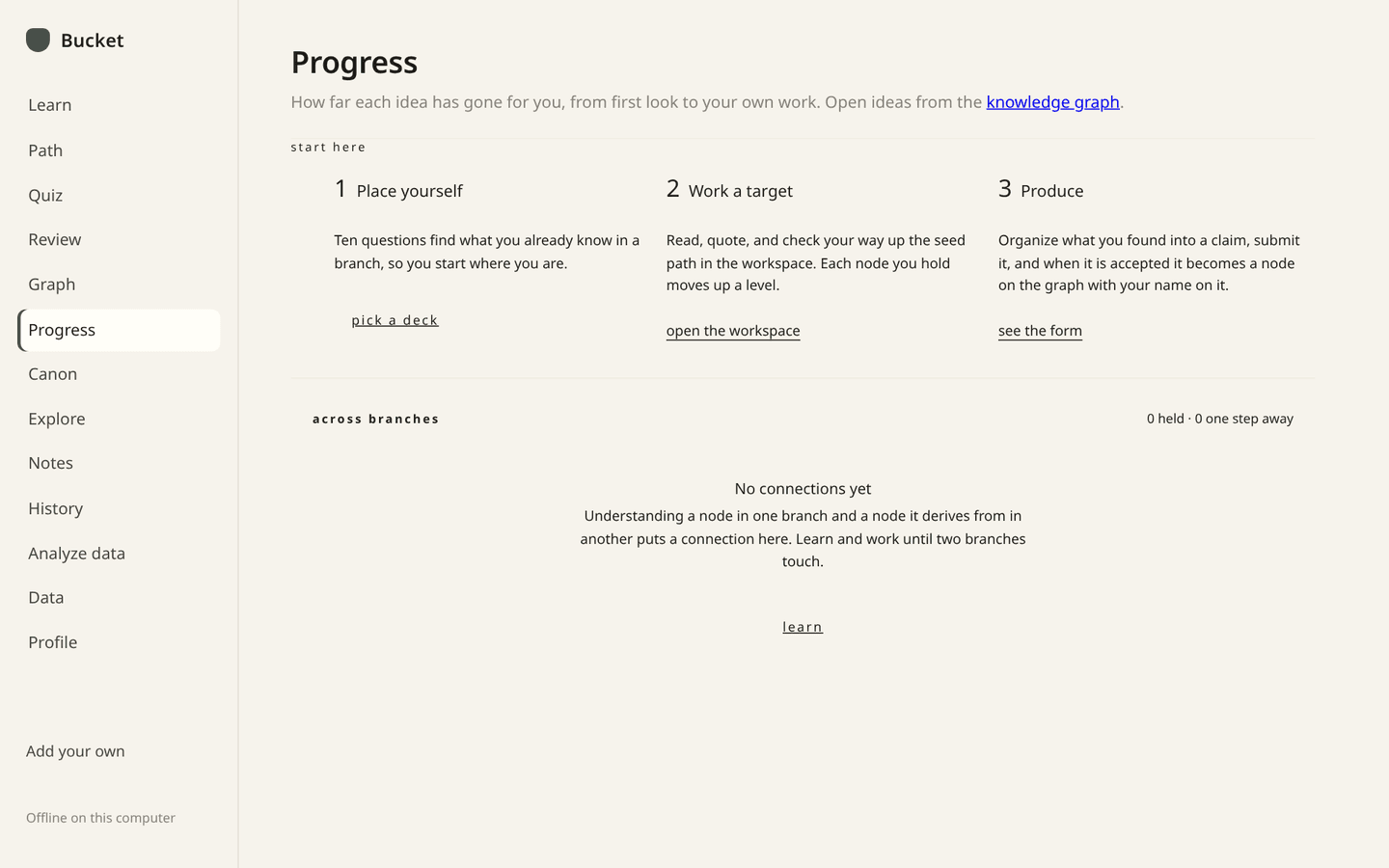
Internalization
The learned concept meets the rest of the graph. Connections, transfer, use beyond where it was taught.
view Progress in the app →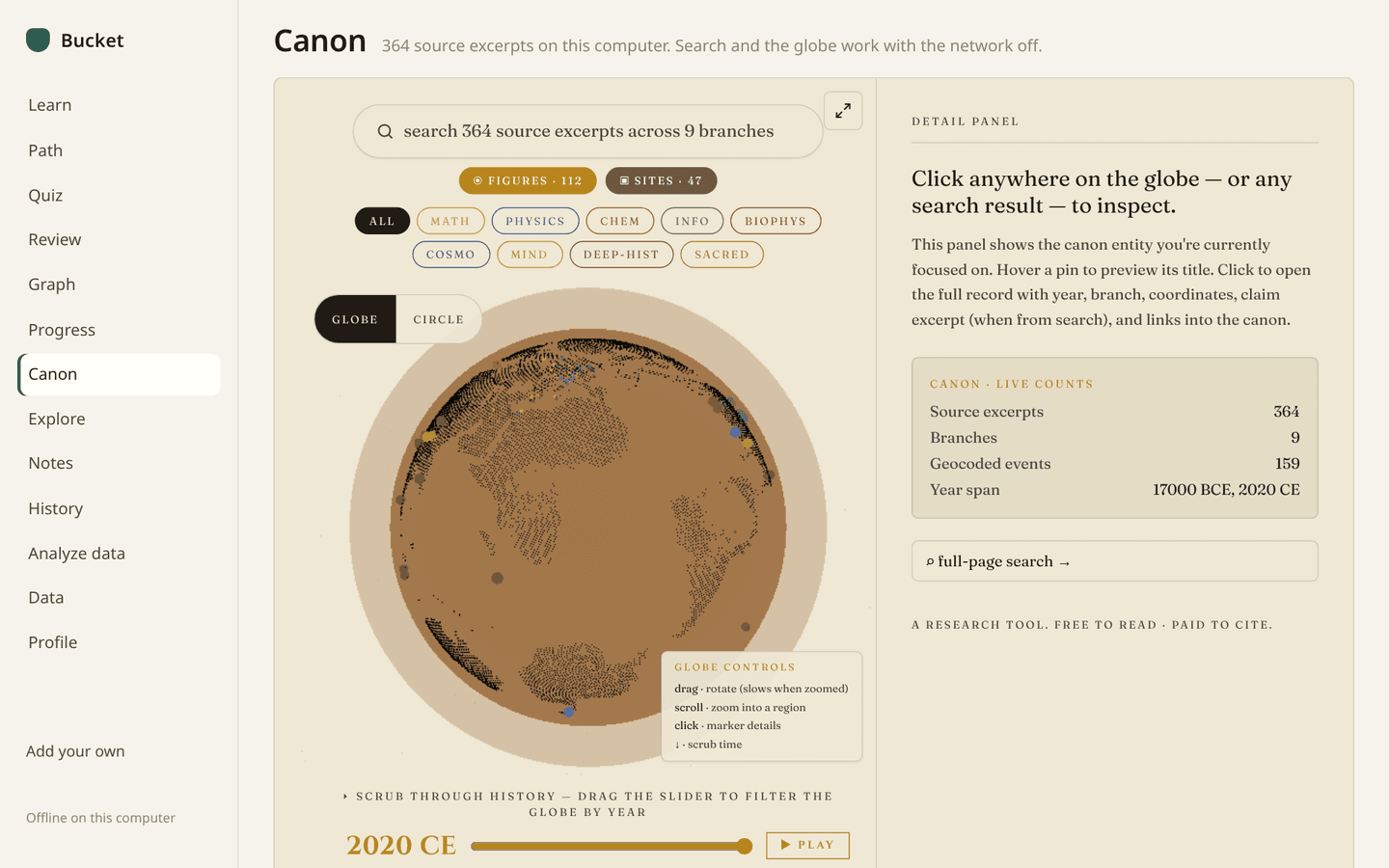
Production
A new node on the graph, built from the nodes you hold, placed among them, and cited by others.
view the Canon in the app →